

What is the path of darkness?
- Carlos Alfredo

- Sep 24, 2025
- 3 min read
Updated: Sep 29, 2025
If you are interested in learning about the path of destruction and darkness, along which, if you walk, you will receive a second death—the death of your soul at the final judgment—then this writing is for you. It is important to know what constitutes walking on the path of darkness in order to avoid it, as Jesus mentions in Matthew 7:13: "Enter through the narrow gate; for wide is the gate and broad is the way that leads to destruction, and many will enter through it."
I have been reading The Forbidden Books of the New Testament translated by Archbishop William Wake, and in the General Epistle of Barnabas I found a detailed description of the path of darkness, that broad and spacious way that Jesus spoke of, along which many walk.
This eBook is available to anyone, anywhere, free of charge and with virtually no restrictions. You may copy it, give it away, or reuse it under the terms of the Project Gutenberg License included with this eBook or online at www.gutenberg.org.
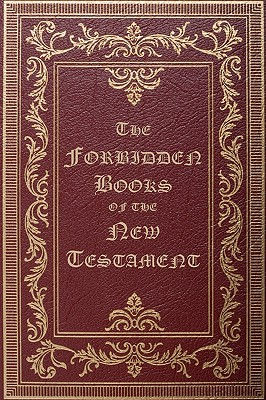
The General Epistle of Barnabas translated by Archbishop Wake
Chapter XV
Verses 1-8
BUT the way of darkness is crooked, and full of cursing. For it is the way of eternal death, with punishment; in which they that walk meet those things that destroy their own souls.
2 Such are; idolatry, confidence, pride of power, hypocrisy, double-mindedness, adultery, murder, rapine, pride, transgression, deceit, malice, arrogance, witchcraft, covetousness, and the want of the fear of God.
3 In this, walk those, who are the persecutors of them that are good; haters of truth; lovers of lies; who know not the reward of righteousness, nor cleave to anything that is good.
4 Who administer not righteous judgment to the widow and orphan; who watch for wickedness, and not for the fear of the Lord;
5 From whom gentleness and patience are far off: who love vanity, and follow after rewards; having no compassion upon the poor; nor take any pains for such as are heavy laden and oppressed.
6 Ready to evil speaking, not knowing him that made them; murderers of children; corrupters of the creature of God; that turn away from the needy; oppress the afflicted; are the advocates of the rich, but unjust judges of the poor; being altogether sinners.
7 It is therefore fitting that learning the just commands of the Lord, which we have before mentioned, we should walk in them. For he who does such things shall be glorified in the kingdom of Hod.
8 But he that chooses the other part, shall be destroyed, together with his works. For this cause there shall be both a resurrection, and a retribution.
REFERENCES TO THE GENERAL EPISTLE OF BARNABAS.
[Barnabas was a companion and fellow-preacher with Paul. This Epistle lays a greater claim to canonical authority than most others. It has been cited by Clemens, Alexandrinus, Origen, Eusebius, and Jerome, and many ancient Fathers. Cotelerius affirms that Origen and Jerome esteemed it genuine and canonical; but Cotelerius himself did not believe it to be either one or the other; on the contrary, he supposes it was written for the benefit of the Ebionites, (the christianized Jews,) who were tenacious of rites and ceremonies. Bishop Fell feared to own expressly what he seemed to be persuaded of, that it ought to be treated with the same respect as several of the books of the present canon. Dr. Bernard, Savilian professor at Oxford, not only believed it to be genuine, but that it was read throughout in the churches of Alexandria, as the canonical Scriptures were. Dodwell supposed it to have been published before the Epistle of Jude, and the writings of both the Johns. Vossius, Dupuis, Dr. Cane, Dr. Mill, Dr, S. Clark, Whitson, and Archbishop Wake also esteemed it genuine: Menardus, Archbishop Land, Spanheim, and others deemed it apocryphal.]

Comments